 0
0
 0
0
TBL Web desk
On 15 June 2023, Bhai Avtar Singh Khanda passed away in a Birmingham hospital at the age of 35. Officially, the cause of death was recorded as acute myeloid leukaemia, which is an aggressive form of blood cancer. Yet three years after his death, questions surrounding the circumstances of his final days continue to linger, fuelled by concerns raised by family members, supporters, independent investigators, and more recently, a forensic pathologist whose findings renewed calls for a formal inquest.
For many Sikhs across the globe, Bhai Sahib’s death, and the controversy that followed it, has become one of the most widely discussed and disputed cases of transnational repression in recent years.
A Life Shaped by Struggle:
Born in May 1988 in Rode, Punjab, Avtar Singh Khanda’s father, Bhai Kulwant Singh, and uncle, Bhai Balwant Singh, were both associated Sikh activists and attained martyrdom for the Sikh struggle.
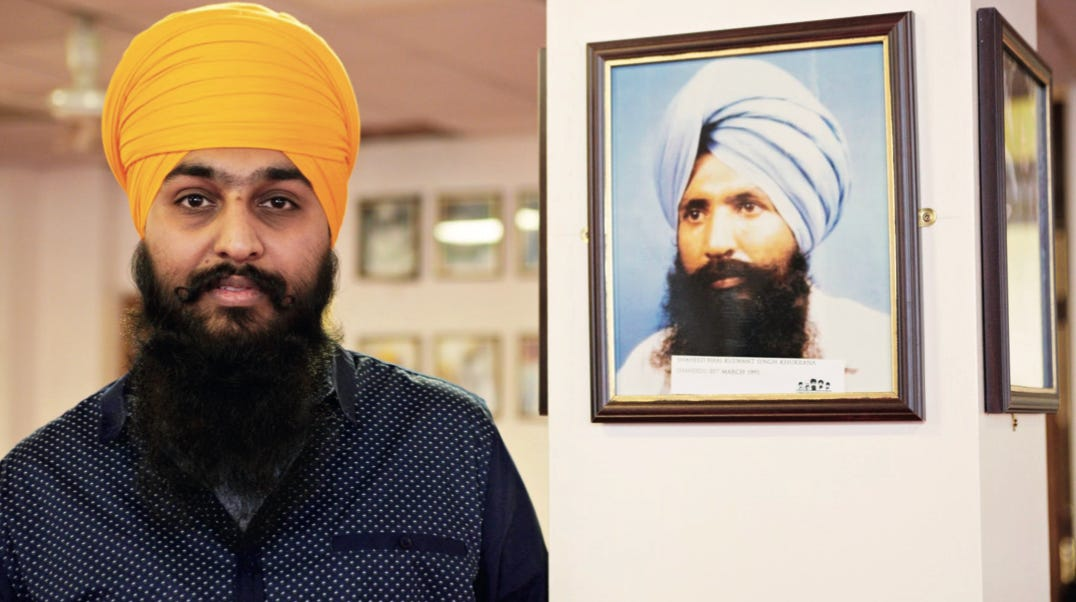
From an early age, Bhai Sahib’s family lived under intense pressure. Police raids, surveillance, arrests, and displacement formed part of everyday life.His family would continue to face scrutiny and harassment for decades after the death of his father in 1991.
Friends and supporters often point to the parallels between Bhai Sahib’s life and that of his father. Both were drawn into Sikh activism, both experienced state pressure, and both became symbols to many within the Sikh community.
In 2010, citing concerns for his personal safety, he sought asylum in the United Kingdom. His application was granted, allowing him to establish permanent residence in the country. He became an influential figure among young Sikhs and Sikh organisations. He regularly spoke about Sikh political issues, self determination, human rights, and the relationship between Punjab and Sikhs in the diaspora.
The Events of 2023:
In March 2023, Punjab witnessed a major crackdown following the rise of Sikh activist Bhai Amritpal Singh. Mass arrests, internet shutdowns, and widespread police operations created a highly charged atmosphere.
Following a protest outside the Indian High Commission in London on 19 March 2023, where the Indian flag was removed from the building, Indian media outlets repeatedly named Avtar Singh Khanda as a central figure. Reports falsely accused him of involvement in the incident, while some commentators and television personalities portrayed him as a threat to India.
Supporters argue that this marked the beginning of a sustained campaign of demonisation against him. Various Indian media reports linked him to extremist activity and claimed he was connected to criminal activity without any proof.
Particularly alarming to many were public threats made by Indian commentators. Family members and supporters later argued that such rhetoric effectively painted a target on his back.
Meanwhile, events were unfolding in Punjab. According to reports later cited by family members, Bhai Sahib’s mother, Bibi Charanjit Kaur, and his sister were questioned and detained by Indian authorities seeking information about him and his alleged links to Sikh activists. The family described a pattern of intimidation that they believed was intended to pressure both him and his relatives.
A Sudden Illness:
On 11 June 2023, Avtar Singh Khanda was admitted to hospital in Birmingham.
Those who knew him say his illness appeared sudden and unexpected. Friends have repeatedly stated that he had been active and appeared healthy before being hospitalised.
Just four days later, in the early hours of 15 June, he passes away.
The speed of his decline shocked family members and Sikhs across the world. For many, the abrupt nature of his illness understandably raised concerns. While doctors determined that acute myeloid leukaemia was the cause of death, questions emerged almost immediately regarding how rapidly the disease had progressed and whether anything else may have contributed to his condition.
The Online Activity That Raised Alarm:
One of the most controversial aspects of the case emerged in the hours surrounding his death. According to an investigation highlighted by Sikh organisations and later referenced in wider discussions, social media accounts linked to coordinated nationalist networks in India began posting messages about Avtar Singh Khanda’s death before the information had become publicly known. One widely cited example involved a post published shortly before news of his death had been officially communicated. The message not only announced his death but also repeated allegations portraying him as a “terrorist” and speculated that he had been poisoned. For supporters, this raised an obvious question: how did individuals appear to know about his death before family members, community organisations, and the wider public? The timing of these posts became a central element of the concerns raised by Sikh organisations. While no definitive explanation has been established, the early dissemination of information continues to be cited as one of the most troubling aspects of the case.
Grief Across Continents:
Following his death, supporters expected a comprehensive investigation.
However, concerns soon emerged regarding the extent of the inquiries carried out.
Family representatives argued that key investigative steps had not been taken. Questions were raised about whether electronic devices had been examined, whether potential threats had been fully investigated, and whether the broader international context surrounding attacks on Sikh activists had been adequately considered.
West Midlands Police maintained that there were no suspicious circumstances surrounding the death.
Yet family members and supporters remained dissatisfied, arguing that the conclusions had been reached without sufficiently examining the concerns they had raised.
These frustrations intensified against the backdrop of developments elsewhere. The killing of Hardeep Singh Nijjar in Canada and allegations concerning plots targeting Sikh activists in North America contributed to growing fears among Sikhs that activists faced genuine security threats.
The Pathologist’s Findings:
In July 2025, nearly two years after Avtar’s death, fresh attention was drawn to the case following a report prepared by forensic pathologist Dr Ashley Fegan-Earl. The report made a significant observation: poisoning could not be ruled out. According to the findings reported by The Guardian, standard testing carried out after his death was not designed to identify every possible toxic substance. The pathologist noted that specialised testing for certain categories of agents had not been conducted and that some substances may leave little or no detectable trace through conventional toxicology screening.
The report further suggested that questions remained unanswered and that a more detailed examination of the circumstances surrounding his death could be justified.
The findings prompted renewed calls for a formal inquest from both family representatives and Sikh organisations. Something that the Sikh community is still waiting for.
Legacy And Memory:
Three years after his death, Avtar Singh Khanda remains a figure who inspires both admiration and debate. To supporters, he was a committed activist who dedicated his life to Sikh political causes despite the risks involved. They remember a man who sought to connect Sikh communities across continents and who refused to abandon his beliefs despite sustained pressure.
The fact is that questions surrounding his death continue to endure.
How did a 35-year-old activist become critically ill so suddenly?
Why were threatening narratives and online attacks directed at him in the months before his death?
How did social media accounts appear to report his death before it became public?
Why were the concerns raised by family members not fully addressed to their satisfaction?
Why was his mother unable to be present to attend her son’s funeral?
These questions remain at the heart of the continuing campaign for answers.
On the third anniversary of his passing, it still remains to be seen whether future investigations will provide further clarity in this ongoing search for truth, accountability, and justice.
Support Independent Media
Your Voice. Your Media. Your TV84.
Support Independent Media. Donate Generously to Help TV84 Continue Delivering Trusted Journalism, Community Stories, and Meaningful Conversations in the Face of Growing Challenges and Restrictions Confronting Independent Voices.